
Today was something else; I visited the Vincent Van Gogh Museum, a dream come true.
I have seen some of his work in Madrid and New York, and I feel a connection every time I stand in front of one of his paintings.
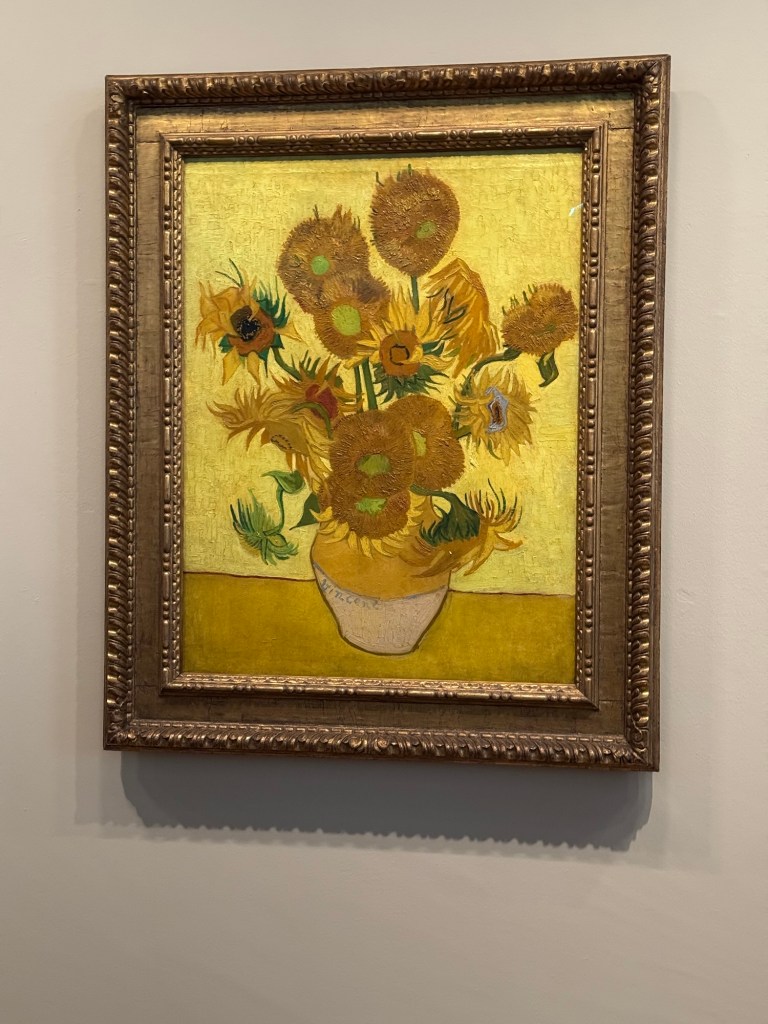
He was the son of a Reformed Minister, a Christian who battled depression. His paintings show his love for nature, the fields, and the common people in bright colours, especially yellow—and lots of it!
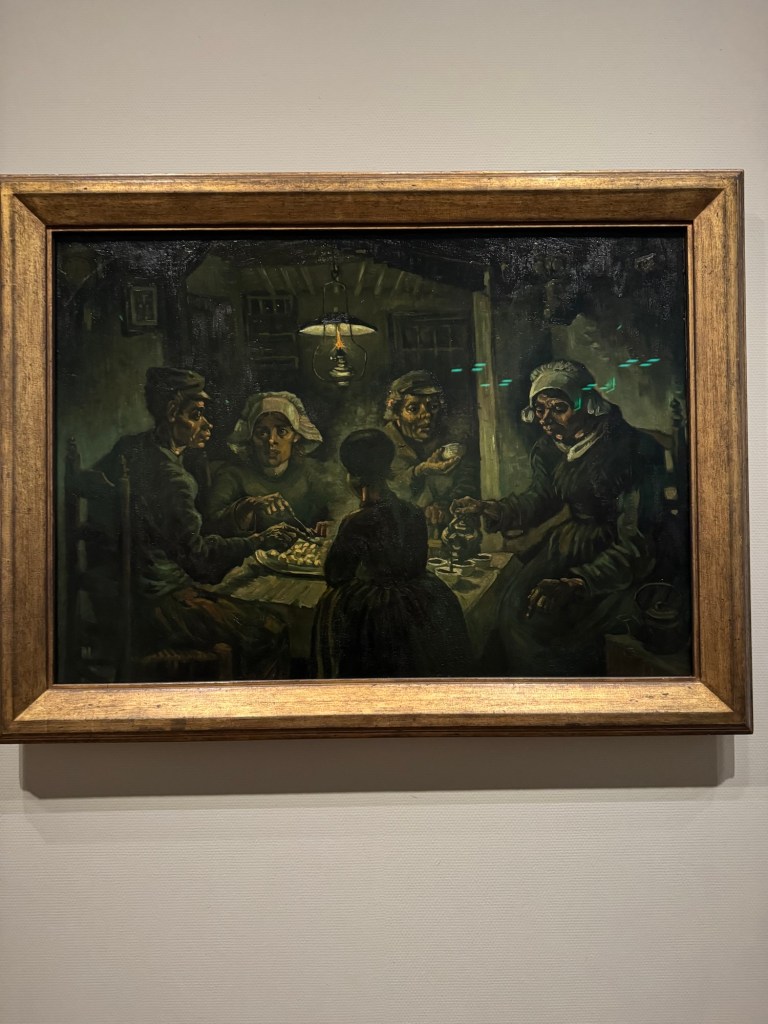
Standing in front of his famous bedroom painting and being exposed to its lively brightness is a unique experience. If you look closely, the composition does not have shadows. Other works have many dark themes, grey colours, and shadows, like his “potato paintings,” where he wanted to highlight the men and women of the land. However, he was much criticised for these paintings.
Then there is “The Sun Flowers,” a painting so impressive and full of life that it actually comes alive. It gives the impression that the flowers are fresh, every detail is covered, nothing is missed, and it is a formidable painting.


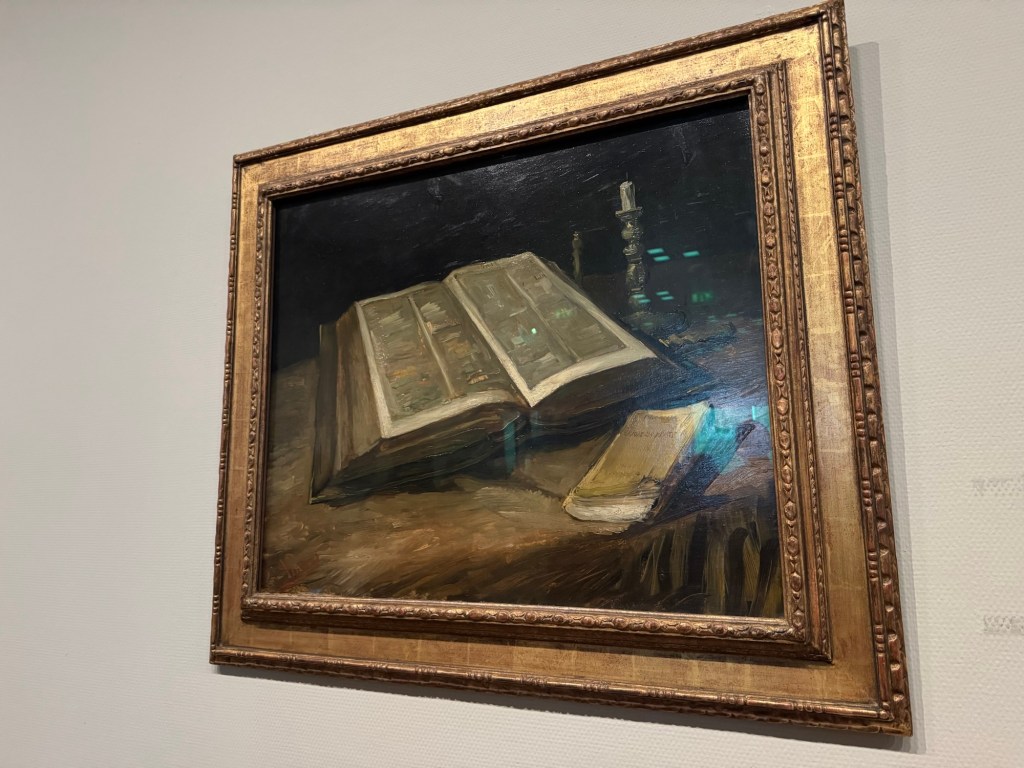
However, painting his father’s Bible significantly brought me to tears. He painted the Bible after his father’s death. It is a pretty big Bible, and just below it is a small book by a French author, Emile Zola, that Vincent found very encouraging.
I stood before this painting for a long time. The Bible is open, with no visible words but strokes of coloured lines, as if he was saying that these words are alive. Then, after I began to move away, I noticed that this painting is called “Still Life with Bible.”
This was his father’s Bible, where he preached to his Reformed Congregation, Sunday after Sunday.
Why paint a Bible?
Well, I understand the emotional argument and connection, but for me and the thousands of other people visiting this museum daily, this painting transcends colours, nature, and people. This is Vincent’s spiritual legacy; whether he meant it or not, he placed and painted God’s Word with the same passion and ability to create the impression that it is alive, not dead.
My great-grandfather was an art teacher who painted, and my father has some of his works. I call this legacy, and it challenged me. What am I leaving behind? I am here because of a great-grandfather who left a powerful legacy.
Van Gogh suffered from depression, and he was admitted more than once to take refuge and to be treated. Yet, he self-harmed and ended his life. He also found healing and relief when he painted. This is the paradox: despite his afflictions and his mental suffering, he was able to bring much life, colours, and beauty through his compositions, and he still does it today.
Van Gogh is not unique; this is not new. I think he followed a path that only a few could journey: to recreate the simplicity of a bedroom with such imagination and skills, to take a bunch of ordinary sunflowers and make them famous, and to bring the Bible to life is the aim of every preacher. Today, I became more alive and thankful, appreciating one man’s beautifully expressed simplicity.
This reinforces in me the simplicity and beauty of the Gospel: Through the suffering of one man, Jesus, I can see life in colours, and I can only imagine what it would be like to experience the full expression of the light and glory of heaven.
Moved.
 D.L.
D.L. 
Leave a comment